Economists' Blind Spot: The Real Role of Energy
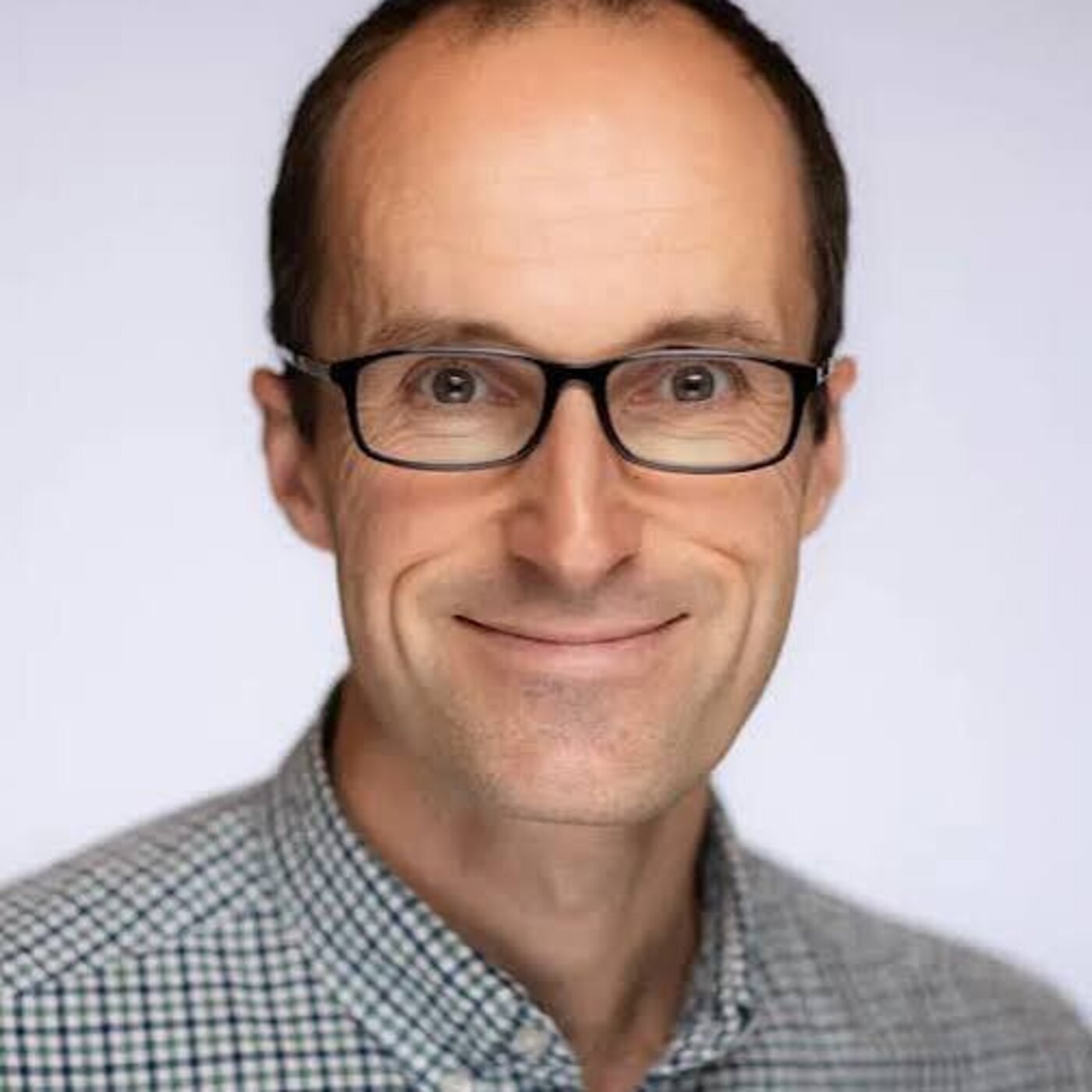
Prof. Paul Brockway


Description
Energy is often treated as a relatively minor part of the economy. Because spending on energy typically accounts for only around 5–10% of national accounts, mainstream economics has long assumed that energy plays a limited role in economic growth. The prevailing view also holds that technological progress can reduce our dependence on energy and other natural resources by making production increasingly efficient.
But is that assumption correct? Does technology really allow economies to decouple from energy use, or is energy far more fundamental than conventional economic thinking suggests?
To explore these questions, we're joined by Paul Brockway, recently promoted Professor of Energy Transitions at the University of Leeds. Welcome, Paul.
[0:02:30] Chapter 1: The Critique of Mainstream Models
[0:15:12] Chapter 2: Energy Return on Investment
[0:41:34] Chapter 3: Useful Energy
[0:59:58] Chapter 4: The Rebound Effect
[1:16:26] Chapter 5: Green Growth, Degrowth, Post-Growth
[1:45:10] Chapter 6: Personal Questions
URL pour les notes de l'épisode : https://www.podcastics.com/podcast/episode/economists-blind-spot-the-real-role-of-energy-428916/
This work is licensed under a Creative Commons Attribution-NonCommercial-NoDerivatives 4.0 International License.

Show-notes
Réseaux sociaux & liens utiles :
[01:09] What are the problems with mainstream models, the ones built on the conventional energy–GDP relations?
Reiner Kümmel — critique of the cost-share theorem — https://link.springer.com/article/10.1007/s41247-017-0027-y && https://papers.ssrn.com/sol3/papers.cfm?abstract_id=4127764
IPCC integrated assessment models; energy scenarios from the IEA, the EIA
CHAPTER 1: THE CRITIQUE OF MAINSTREAM MODELS
[10:18] In a nutshell, what is the core claim of exergy economics? And why start from exergy?
Exergy Economics Network (formed in the mid-2010s)
MARCO-UK model (macroeconometric resource consumption model)
CHAPTER 2: ENERGY RETURN ON INVESTMENT (EROI)
[15:12] Three directions are open to us: useful energy, energy return on investment, the rebound effect. Which one do you pick?
[16:45] How would you define energy return on investment?
[17:42] Why does it matter to define EROI at the right stage of the energy chain?
Marco Raugei — life cycle analysis and EROI of renewable energy
[23:28] Critical minerals are also getting harder to extract. Will that offset the gains made on wind and PV?
[26:15] Is there an EROI threshold below which a society can no longer function? What should we make of the net energy cliff?
[30:32] What do you think of the pyramid of energy needs associated with EROI?
[33:36] How has the EROI of the agriculture, aquaculture, fishing and forestry system evolved, and thanks to what?
[36:48] What does the history of land productivity over the past 200 years tell us? And what about the quality of food, not just its energy content?
[40:22] Does that mean the quality of food will also have to evolve?
CHAPTER 3: USEFUL ENERGY
[41:34] What is useful energy, explained to someone who has never heard of it?
[44:02] How was this database built, and how much uncertainty is there on its individual parameters?
Bob Ayres and Benjamin Warr — foundational work on exergy and economic growth (early 2000s)
Julia Steinberger and John Barrett — PhD supervision, University of Leeds
Tiago Domingos and Tânia Sousa — Lisbon research group
Matthew Kuperus Heun — development of the primary-final-useful database (R platform)
[49:22] How do you handle units when you move from joules to tonne-kilometres or passenger-kilometres?
Lina Brand-Correa — well-being energy service metrics
[52:24] Can you capture a modal shift policy towards public transport while staying at the useful energy stage?
[53:20] How has national efficiency evolved in China, the UK and the US?
Eric Williams et al. (2008), Japan paper — concept of "efficiency dilution"
[55:51] So does that mean 80% of the energy is lost?
Jonathan Cullen (2010) — world assessment of energy conversion from primary to final to useful
[56:49] What does the paper "On the right track?" show about nearly 200 years of world rail transportation?
CHAPTER 4: THE REBOUND EFFECT
[59:58] The Jevons paradox was true 150 years ago. Is it still true today, and how can we know?
William Stanley Jevons, The Coal Question (1865) — Jevons paradox
Josiah Parkes (1838) — steam boiler experiments
[01:11:02] If we managed to neutralise the macroeconomic rebound effect, could we still benefit from efficiency gains?
David Font Vivanco and Jeroen van den Bergh — rebound mitigation policies
[01:15:22] You showed that computing electricity use stabilised in 2022, before AI. Do you see a new wave coming?
CHAPTER 5: GREEN GROWTH, DEGROWTH, POST-GROWTH
[01:16:26] What is the difference between green growth, degrowth and post-growth?
European Society for Ecological Economics (ESEE)
[01:20:54] Why is there this divide among economists about degrowth?
Steve Keen — critique of neoclassical economics
[01:24:11] Advocates of green growth point to decoupling. Why is that argument a fallacy?
[01:26:21] Why work on sufficiency when, on the face of it, people don't want it?
European REAL project — Julia Steinberger, Giorgos Kallis, Jason Hickel
[01:29:35] What was the core argument of the paper you co-authored with Jason Hickel, and how was it received?
[01:33:08] What is the goal of your Leverhulme project, and where are you so far?
[01:38:18] How would you represent the macroeconomic part in a model projecting the energy system? Does such a model exist?
[01:42:21] How do you see the interdisciplinarity of exergy economics and its challenges?
CHAPTER 6: PERSONAL QUESTIONS
[01:45:10] Why did a structural engineer turn towards ecological economics and energy analysis?
Limits to Growth: The 30-Year Update (2004)
[01:49:47] Why is "energy transitions" plural in your title?
[01:50:18] What books or media have you recommended to others in the last few months?
[01:51:08] If you could write a message on every university blackboard, what would it say?
Remerciements :
Emilie Malcourant
Monxage
LLL
UCLouvain
Louis Gayina


Join the conversation
You can post now and register later. If you have an account, sign in now to post with your account.