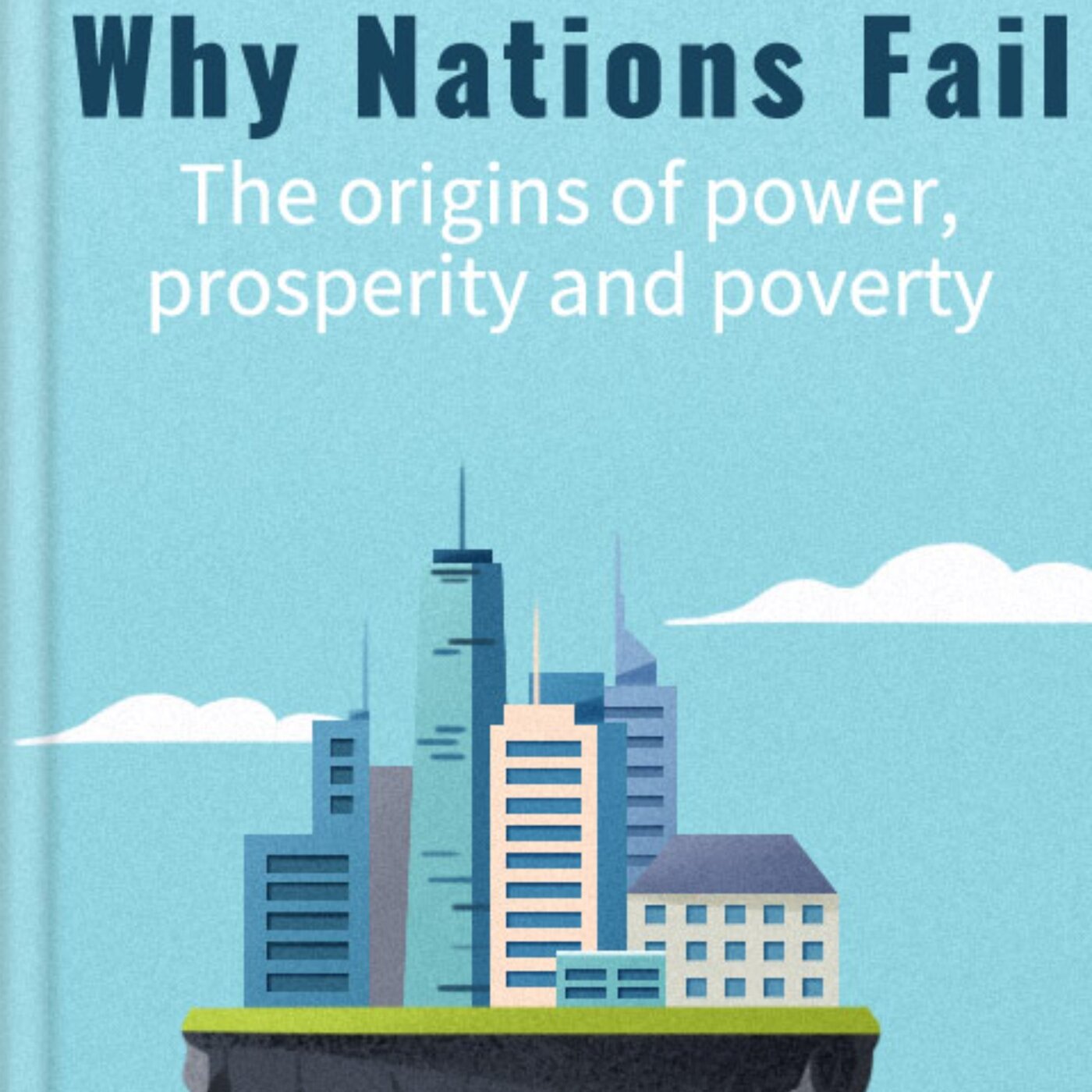





Chapter 1 What's Why Nations Fail
"Why Nations Fail: The Origins of Power, Prosperity, and Poverty" by Daron Acemoğlu and James A. Robinson argues that the differing economic outcomes of nations are primarily determined by their political and economic institutions. The authors emphasize that inclusive institutions—those that promote participation, protect property rights, and encourage innovation—lead to prosperity, while extractive institutions—characterized by concentration of power and lack of opportunities—lead to poverty. They explore historical examples to illustrate how these institutions evolve and the critical role they play in shaping a nation's success or failure. Ultimately, the book highlights the importance of political inclusivity in fostering economic growth and development.
Chapter 2 The Background of Why Nations Fail
"Why Nations Fail," published in 2012 by economists Daron Acemoglu and James A. Robinson, emerges from a growing discourse on the role of institutions in economic development. The authors aimed to unpack the stark differences in prosperity and poverty among nations, arguing that inclusive political and economic institutions lead to sustained growth, while extractive institutions foster inequality and stagnation. The book was influenced by the global context of the 2008 financial crisis and the increasing interest in understanding the roots of inequality and institutional dysfunction, challenging traditional narratives that attributed economic success to culture, geography, or ignorance. Acemoglu and Robinson's work serves as both an academic inquiry and a call for policy reforms to create more equitable societies.
Chapter 3 Quotes of Why Nations Fail
Why Nations Fail quotes as follows:
Here are ten notable quotes from "Why Nations Fail" by Daron Acemoglu and James A. Robinson that capture the book’s key themes on political and economic institutions:
1. “Institutions are the underlying cause of economic growth.”
2. “The failure to adopt inclusive institutions is the primary reason why nations fail.”
3. “Extractive institutions benefit a small elite at the expense of the vast majority.”
4. “Economic growth is not only about capital accumulation but also about the type of institutions we have.”
5. “Inclusive economic institutions encourage innovation and entrepreneurship, while extractive ones stifle them.”
6. “Political centralization is a necessary foundation for economic development.”
7. “There is no such thing as a naturally rich or poor country. It is the institutions that matter.”
8. “Nations that provide a level playing field for all their citizens will ultimately prosper.”
9. “The key to understanding how nations succeed or fail is to understand their institutions.”
10. “History matters, but it is our institutions that ultimately shape our destiny.”
These quotes reflect the central arguments of the book, focusing on the role of inclusive versus extractive institutions in shaping the economic outcomes of nations.
Book Summary Audio Bookey https://www.bookey.app/audiobook/why-nations-fail
Quotes https://www.bookey.app/book/why-nations-fail/quote
YouTube https://www.youtube.com/watch?v=A4eVoOlIuis
Amazon https://www.amazon.com/Why-Nations-Fail-Origins-Prosperity/dp/0307719227
Goodreads https://www.goodreads.com/book/show/12158480-why-nations-fail
- economics
- politics&global landscape




Join the conversation
You can post now and register later. If you have an account, sign in now to post with your account.